Three Summers That Shaped My Understanding of Food, Land, and People
- Nimesh Ramanujakootam
- Mar 12
- 3 min read

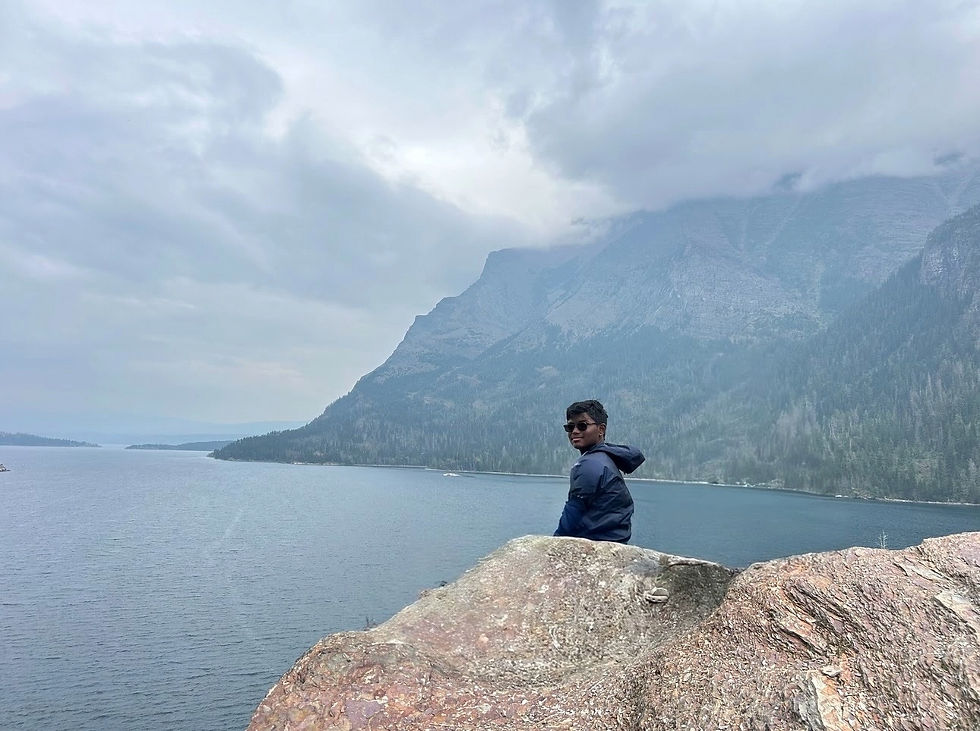
The summer of 2024 was not a break from my work with TIHSA — it was an intensive extension of it. Over the course of ten weeks, I participated in three back-to-back programs that took me from a university farm in the Texas prairie to the mountains of Montana. Each experience was different, but together they gave me a much fuller picture of what sustainable agriculture, indigenous stewardship, and food security actually look like on the ground.
USDA AgDiscovery Program — Prairie View A&M University
In early June, I attended the USDA's AgDiscovery Summer Youth Program at Prairie View A&M University, a historically Black university with deep roots in agricultural education. The two-week program introduced students to careers in agriculture and related sciences through hands-on labs, field work, and mentorship from USDA professionals.
My research at AgDiscovery focused on two areas: medicinal plants and sustainable entomology practices for invasive species management. I also received a Certificate of Appreciation for participating in a mock agricultural crime investigation — a simulated USDA agent exercise involving a goat farm visit and animal transportation documentation. It was an unexpectedly fascinating window into how agricultural law and food safety actually get enforced.
For me, Prairie View was also a personal connection — I had been attending Dr. Ali Fares's Land Grant Seminar Series there throughout the 2024 academic year, listening to researchers present on topics ranging from drone-based crop phenotyping to food safety and USDA watershed research. Attending AgDiscovery in person grounded all of that material in something real: soil I could touch, crops I could see, scientists I could ask questions of face to face.
Student Climate Change Congress (SC3) — U.S. Fish & Wildlife Service
In late June and early July, I participated in the Student Climate Change Congress (SC3), held at the National Conservation Training Center of the U.S. Fish and Wildlife Service. SC3 brings together high school students from across the country to study climate science, conservation, and environmental policy through an immersive, residential program.
The curriculum included sustainable agriculture, the climate-forest-water nexus, the Carbon Disclosure Project, and public policy frameworks like Executive Order 14008. Working alongside students and scientists from diverse backgrounds reinforced that addressing the climate crisis requires exactly the kind of interdisciplinary, community-grounded approach that indigenous agricultural knowledge has always embodied.
Montana Blackfeet Summer Service Camp
In August, I traveled to Montana for a summer service camp with the Blackfeet Nation — a federally recognized tribe whose homeland spans the Rocky Mountain Front near Glacier National Park. This was the most personally transformative of the three experiences.
Over 40+ hours of service, I participated in conservation ranch work, aided in Sun Dance preparations, and helped with tipi construction — experiences that connected me directly to living Blackfeet cultural traditions. I also volunteered at Glacier National Park, where I participated in invasive weed removal to protect native ecosystems, even winning a weed-pulling competition. Most meaningfully, I had the opportunity to learn from Blackfeet leader Leon Rattler about indigenous land rights and the Blackfeet Nation's ongoing relationship with and fight for their ancestral lands.
Serving alongside members of the Blackfeet community, I saw firsthand what it means for an indigenous nation to maintain its relationship with the land across generations — and what it costs when that relationship is disrupted. The Blackfeet people's knowledge of their ecosystem, their agricultural traditions, and their approaches to food sovereignty spoke directly to what TIHSA is trying to do in Texas.
What I Brought Home
These three summers gave me more than credentials. They gave me perspective. The problems TIHSA is working on — food insecurity, unsustainable agriculture, the erasure of indigenous ecological knowledge — are not unique to Texas. They are national and global in scope. And the solutions require looking beyond our own backyard.
Every seed we plant, every chapter we establish, every student we educate through TIHSA is part of a much larger movement. I came back to Texas more committed than ever to growing it.


Comments